
Niti Aayog vice-chairman Rajiv Kumar debunked claims of jobless growth, saying how can a country grow at an average of 7 per cent without employment.


'IT companies do not have a large presence there either in terms of market and team. So, the impact of the war will be minimal. But West Asia is an emerging economy.'

Hiring activity witnessed a 6 per cent year-on-year growth in March this year, supported by a rebound in economic activities and led by sectors such as banking and telecom, according to a report. However, there was a marginal dip of 2.4 per cent in hiring activity as compared to February, owing to the appraisal season, according to the Monster Employment Index (MEI). "Two years into the pandemic, it is heartening to see that the Indian economy has overcome setbacks and challenges with hiring momentum exceeding pre-COVID levels by 6 per cent this year compared to 2020," Monster.com, a Quess company, CEO Sekhar Garisa noted.

Germany is now sitting on a mountain of savings.

Emerging technologies like cybersecurity and the Internet of Things have the potential to add 1.4 million new IT jobs in India by 2027.

The Bharatiya Janata Party on Saturday released its manifesto for the November 17 Madhya Pradesh elections promising MSP for wheat at Rs 2,700 per quintal and paddy at Rs 3,100 and houses for beneficiaries of the state's flagship scheme 'Ladli Bahna'.

One in five Indian students now prefer new and unconventional study destinations like Ireland, Turkey and Spain. The number of Indian students in Germany grew by 20.85 per cent in the winter semester to stand at over 25,000.

Companies announce Rs 768 bn worth investments in Dec quarter versus Rs 1.15 trn in Sep quarter

India's central bank has however, forecast an 8.2 per cent economic growth in FY 11.

Indian service sector output broadly stabilised in September but remained in the contraction zone as incoming new business fell moderately due to the damaging impact of the pandemic on demand, leading to more job losses.

Overseas investors have pulled out a net Rs 1,14,855.97 crore from the Indian markets in the current year so far, amid heightened geopolitical tensions and inflation concerns. Foreign portfolio investors have sold domestic equities worth Rs 48,261.65 crore so far this month, taking the year-to-date tally this year to a massive Rs 114,855.97 crore, according to depositories data. The exodus of foreign investors was largely owing to inflationary pressures and deepening global macroeconomic conditions following the Russia-Ukraine war, experts said.

Private equity (PE) investment in real estate declined 5 per cent year-on-year in April-June to $1.9 billion because of high interest rates, according to Anarock. PE inflows stood at $2 billion in the year-ago period. Real estate consultant Anarock has come out with a report titled 'FLUX Q1 FY24 Market Monitor for Capital Flows in Indian Real Estate'.

India's services sector activity eased in August but growth rates for new orders remain elevated, as services firms indicated the sharpest upturn in new export business which acted as a catalyst for firms to expand their workforces as well as output, a monthly survey said on Tuesday. Despite falling from 62.3 in July to 60.1 in August, the seasonally adjusted S&P Global India Services PMI Business Activity Index indicated one of the strongest increases in output seen since mid-2010. For the 25th straight month, the headline figure was above the neutral 50 threshold.

Indian rupee has declined by about 25 per cent since December 31, 2014, and is nearing 80 against the dollar, the Lok Sabha was informed on Monday. The value of the rupee declined from 63.33 against a dollar on December 31, 2014, to 79.41 on July 11, 2022, Finance Minister Nirmala Sitharaman said in a reply quoting RBI data. The exchange rate of the Indian Rupee against the dollar was Rs 78.94 per dollar as of June 30, 2022, Finance Minister Nirmala Sitharaman said in a written reply.

Suggesting steps to boost the Indian economy, the IMF chief further said the government should focus on fiscal consolidation.

'India is nowhere near the peak of the infection given its large population of 1.3 billion'

'In the last 4, 5 years, ever since online companies started online shopping in a big way with heavy discounts, our sales are affected badly.' 'As there is no control over the way the online companies operate, they were able to destroy the domestic retail market to a great extent.'

The world needs to wake up to this new dimension of war at sea and be prepared to face the 'unknown enemy' who have the advantage of attacking at their choice of location and time, cautions Commodore Venugopal Menon (retd).

The severity of the second wave of COVID-19 infections in India poses a key challenge for the FMCG industry and the spread of the virus to rural areas on a relatively higher scale as compared to the first wave is also expected to weigh on industry growth outlook, according to ITC Ltd. There is heightened uncertainty around the timing and shape of the recovery trajectory of overall economic growth in India due to the virus, the company said in its Annual Report for 2020-21. In terms of consumption, urban-led recovery may be relatively muted compared to the first wave as consumers switch to precautionary savings mode and rising healthcare costs eat into household spending, while rural demand may also be blunted by the large-scale spread of the virus to the hinterland in the second wave.

ASK Wealth Advisors says 5 million, CMIE's estimate is 2 million and Ghosh & Ghosh said it was 7 million!
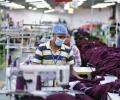
'The finance minister said, the MSME is the backbone of the economy. My question is, what have you done for the sector?'

India is not producing good jobs, but creating a lot of Rs 10,000-Rs 15,000 low-paid jobs which are not fancied by degree holders. Pai suggested that India adopt the Chinese model of opening up labour-intensive industries and building infrastructure near coasts, besides investing heavily in hitech R&D to meet the aspirations of job-seekers.

India Inc closed FY15 on a positive note.
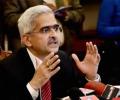
Amid prolonged uncertainty, continued policy support will be crucial for sustained economic recovery from the coronavirus pandemic, Reserve Bank Governor Shaktikanta Das said at the recent meeting of the Monetary Policy Committee. "In this period of prolonged uncertainty, it would be wise to remain agile and respond in a gradual, calibrated and well telegraphed manner to the emerging challenges," opined Das, according to the minutes of the MPC meeting released by the Reserve Bank on Thursday. Observing that economic recovery from the pandemic remains incomplete and uneven, he said, "continued support from various policies remains crucial for a sustained recovery." The governor said the renewed surge in international crude oil prices, however, requires close monitoring.
'Since the growth is not fast enough to provide jobs for the young, the fallout will be political and social,' warns T N Ninan.

Benchmark indices Sensex and Nifty slid for a seventh straight session on Monday, logging their longest losing run in the past five months, following a bearish trend in global markets amid concerns over aggressive rate hikes by developed economies. Fresh foreign fund outflows and losses in IT, auto and oil stocks also dented investor sentiments. The BSE Sensex declined by 175.58 points or 0.30 per cent to close at 59,288.35 with 17 of its shares posting losses.

The Reserve Bank on Monday advised banks to provide shade from the sun and water to customers waiting to exchange or deposit Rs 2,000 notes. It can be noted that during the note ban in 2016, there were allegations of customers dying while waiting in queues to exchange bank notes. Following Friday's announcement of withdrawing Rs 2,000 notes -- the notes continue to be legal tender unlike demonetisation exercise -- there were concerns about customers facing inconvenience, especially given the summer being at its peak.

To help the country emerge as a true welfare State, political parties must put the country's interests first before strategising to win elections and short-term goals, argues Ramesh Menon.

E-learning and work from home have forced a section of feature phones users to shift to smartphones.

We love a leader who oozes authority and firmness, notes Virendra Kapoor.

Members of the Monetary Policy Committee (MPC) felt that though the Indian economy was resilient in the third wave, it, however, lost some momentum and with inflation likely to soften, there is room to continue with the accommodative stance and support revival, the minutes of the MPC meeting released on Thursday revealed. The six-member MPC voted to keep the policy rate unchanged and continued with the accommodative stance at its meeting on February 10. However, external member Jayanth Verma voted against the stance because he felt a switch to neutral was long overdue and the current stance has become counterproductive and deflects focus away from addressing recessionary trends that date back to at least 2019.

'The China opportunity, the digital opportunity and the end of geography opportunity are the three pieces of luck India got due to Covid.'

'It is not simply demonetisation or GST, it is this government's failure to manage the financial sector crisis.'

He cautioned however that these are the early signs and one should not start celebrating.

The central bank's currency management will be critical over the next few months. A weaker rupee could help to revive exports. But, the currency must fall slowly and in controlled fashion, says Devangshu Datta.

Unprecedented rains and floods in the northern region in the past few days have not only caused extensive damage to lives and property but have also impacted business and commercial establishments. Vegetable prices have gone through the roof in the national capital and many other parts of the country since rains started pouring earlier this month. Traders say vegetable prices would come down only after roads open and skies clear, even as water in the fields will take time to recede.

Concerned by the continuous downward revision in the monthly net enrolment numbers, the EPFO has begun counting people quitting their previous jobs and joining a new one as an addition to the net payroll. According to experts these people cannot be counted as those who got a new job.

India has lost almost the entire buffalo meat export market to Brazil, Australia and the US.

Globally, industries need to sit together and look at the demand for professionals that is expected to emerge from different countries.
